
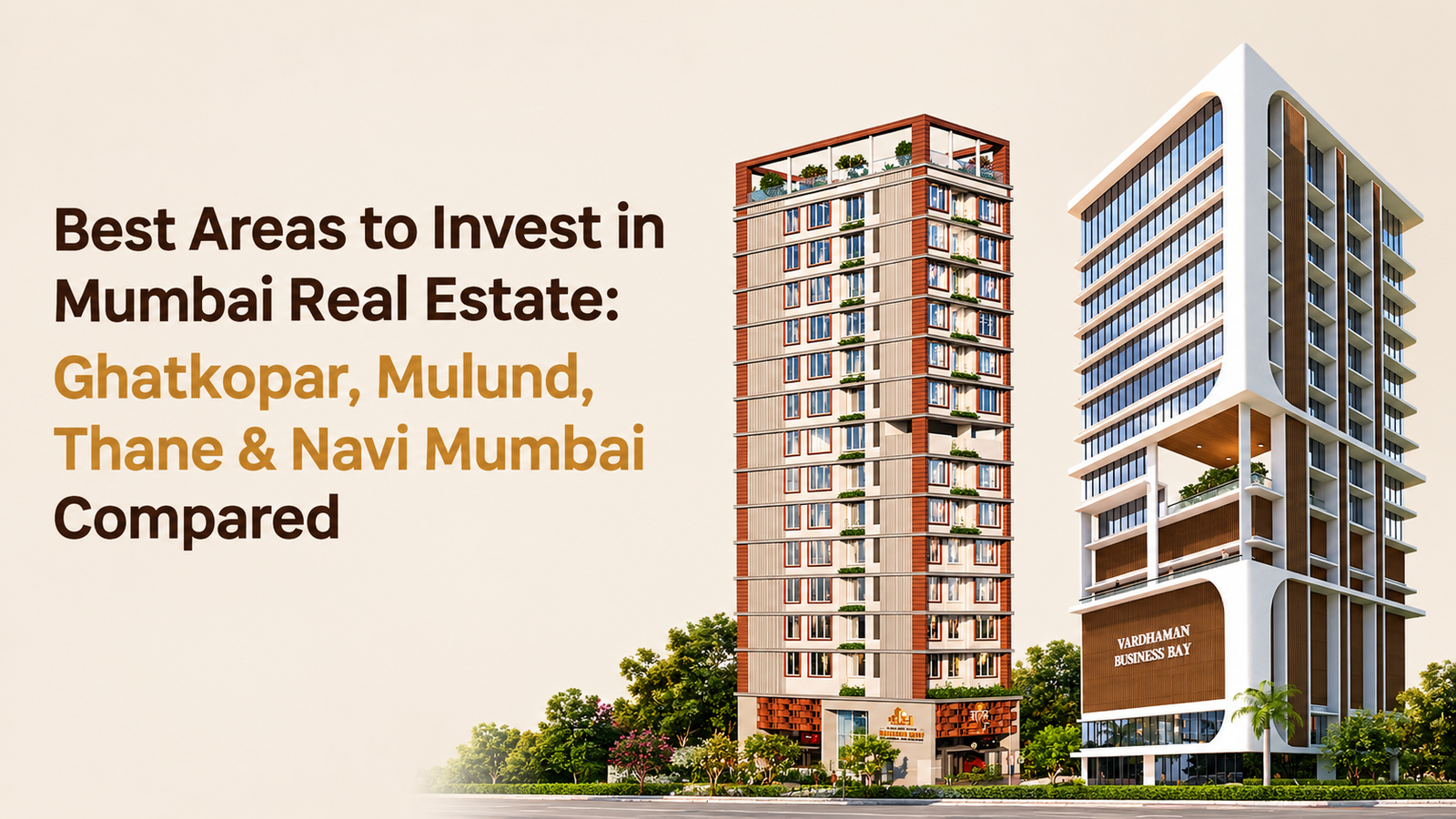
Mumbai’s real estate market continues to expand beyond its traditional residential hubs. In 2026, homebuyers and property investors are exploring locations where connectivity, infrastructure, employment opportunities, social amenities and new development come together.
Areas such as Ghatkopar, Mulund, Thane and Navi Mumbai have become important choices for people looking to buy residential property in the Mumbai Metropolitan Region. At the same time, locations such as Vikhroli, Chembur, Andheri, Powai, Bhandup and Panvel offer their own advantages based on connectivity, neighbourhood development and proximity to major employment centres.
For anyone exploring property investment in Mumbai in 2026, it is important to look beyond property prices. Connectivity, infrastructure, project quality, developer reputation, neighbourhood amenities and long-term usability can all influence a property purchase.
Here are 10 areas worth researching in 2026.
10 Best Areas to Invest in Mumbai Real Estate in 2026
1. Ghatkopar
Ghatkopar remains one of the prominent residential locations in Mumbai’s eastern suburbs. Its position between central and western Mumbai makes it convenient for professionals travelling across different parts of the city.
One of Ghatkopar’s major advantages is its established transportation network. The Mumbai Metro connects Ghatkopar with Andheri and the western suburbs, while Ghatkopar railway station provides access to Mumbai’s Central Railway network.
The neighbourhood also has established schools, hospitals, restaurants, retail destinations and everyday conveniences.
For buyers considering eastern Mumbai, Ghatkopar can be evaluated based on connectivity, established social infrastructure, neighbourhood quality and the reputation of individual developers.
2. Mulund
Mulund is an established residential market in Mumbai’s eastern suburbs. The locality is known for its residential environment and access to both Mumbai and the wider Mumbai Metropolitan Region.
Its proximity to the Eastern Express Highway and Central Railway network makes commuting easier, while upcoming infrastructure is expected to further improve connectivity between Mumbai, Mulund and Thane.
Mulund is particularly relevant for buyers looking for established residential communities combined with improving infrastructure.
When comparing properties in Mulund, buyers should consider the project’s proximity to railway stations, major roads, schools, hospitals, shopping areas and future transportation infrastructure.
3. Thane
Thane has developed into one of the major residential and commercial markets within the Mumbai Metropolitan Region. The city has experienced extensive residential development, along with the growth of commercial spaces, retail destinations and supporting infrastructure.
Connectivity remains one of the major factors influencing Thane’s real estate market. The area has access to railway connections, major highways and expanding metro infrastructure.
Thane also provides connectivity towards Mumbai, Navi Mumbai and other parts of the MMR.
Because Thane covers a large geographical area, buyers should compare individual micro-markets rather than evaluating the entire city as a single property market.
4. Navi Mumbai
Navi Mumbai is one of the most significant planned urban regions surrounding Mumbai. Its planned development, multiple nodes, residential communities and expanding commercial infrastructure have made it an important part of the MMR real estate market.
Major infrastructure projects have also improved connectivity between Mumbai and Navi Mumbai.
Areas within Navi Mumbai differ significantly from one another, so buyers should compare established nodes with newer development areas. Factors such as proximity to railway stations, highways, commercial hubs, educational institutions and upcoming infrastructure should be considered.
For people looking at long-term property ownership, Navi Mumbai can be an important market to research in 2026.
5. Vikhroli
Vikhroli occupies a strategic position in Mumbai’s eastern corridor and provides access towards both eastern and western parts of the city.
The locality is benefiting from ongoing infrastructure development, including metro connectivity that links important areas such as Powai, Kanjurmarg and Vikhroli.
Vikhroli is also close to major employment areas and established residential neighbourhoods.
For property buyers, connectivity to business districts, highways, railway stations and upcoming metro infrastructure can be important considerations when comparing projects in the area.
6. Andheri
Andheri continues to be one of Mumbai’s major residential and commercial hubs. Its location provides access to employment centres, transportation networks, shopping destinations, the airport and several established residential communities.
Metro and suburban railway connectivity make the area accessible from different parts of Mumbai.
Andheri also has strong connections to commercial areas such as Andheri East and other major employment districts.
Property prices and characteristics can vary significantly between Andheri East and Andheri West, making micro-location an important consideration for buyers.
7. Chembur
Chembur is an established eastern Mumbai suburb with connectivity towards South Mumbai, BKC, the eastern suburbs and Navi Mumbai.
The area has established residential communities, schools, hospitals, retail destinations and transportation options.
Road infrastructure connecting Chembur with other parts of Mumbai has also contributed to its accessibility.
For buyers, Chembur offers a combination of established neighbourhoods and redevelopment activity. The quality, location and credentials of individual projects should therefore be carefully compared.
8. Powai
Powai has become an important residential and employment hub in Mumbai. The area combines residential communities with corporate offices, educational institutions, restaurants, retail destinations and recreational facilities.
Its location near the Jogeshwari–Vikhroli Link Road provides access to both eastern and western Mumbai.
Additional metro infrastructure is also expected to strengthen connectivity around Powai, Vikhroli and Kanjurmarg.
For professionals working in Powai, Andheri East, SEEPZ and nearby employment zones, the locality can be particularly relevant when searching for a home close to work.
9. Bhandup
Bhandup is an established residential locality situated between Mulund and other central-eastern parts of Mumbai.
Its proximity to the Eastern Express Highway and Central Railway provides residents with multiple transportation options.
The locality is also connected to the broader infrastructure corridor linking Bhandup, Mulund and Thane.
For buyers looking for residential property in eastern Mumbai, Bhandup can be evaluated based on accessibility, existing amenities, project quality and surrounding development.
10. Panvel
Panvel has become increasingly important within the broader Navi Mumbai and Mumbai Metropolitan Region development landscape.
The area benefits from road and railway connectivity and its proximity to major infrastructure projects in the Navi Mumbai region.
Improving regional connectivity has increased interest in areas surrounding Panvel and Navi Mumbai.
For property buyers, it is important to assess the exact location, transportation options, existing amenities, employment accessibility and development timelines before purchasing property in Panvel.
Ghatkopar vs Mulund vs Thane vs Navi Mumbai
For buyers specifically comparing these four locations, each area offers a different residential environment and development profile.
| Area | Key Consideration | Connectivity | Research Focus |
| Ghatkopar | Established Mumbai suburb | Metro + Central Railway | End-use and established residential market |
| Mulund | Established residential neighbourhood | Railway + Eastern Express Highway + Metro | Residential communities |
| Thane | Large MMR residential market | Rail + Road + Metro | Project-level comparison |
| Navi Mumbai | Planned regional development | Rail + Road + Metro + Major infrastructure | Long-term development |
| Vikhroli | Eastern Mumbai location | Metro + Road network | Connectivity-driven development |
| Andheri | Major employment and residential hub | Metro + Railway + Road + Airport | Location and accessibility |
| Chembur | Established eastern suburb | Road + Rail | Redevelopment and established communities |
| Powai | Residential + employment ecosystem | Road + Metro development | End-use and professionals |
| Bhandup | Central-eastern suburban market | Rail + Road + Metro development | Accessibility |
| Panvel | Navi Mumbai growth corridor | Rail + Highways | Infrastructure and development |
What Should You Check Before Buying Property in Mumbai in 2026?
Choosing a location is only one part of a real estate investment decision. Two properties in the same neighbourhood can have very different characteristics.
1. Connectivity
Check the actual distance to railway stations, metro stations, highways, employment hubs and major roads. Don’t rely only on advertised travel times.
2. Project Credentials
Check the developer’s track record, project approvals, construction status, possession commitments and MahaRERA registration details where applicable.
3. Neighbourhood Development
Look at the facilities available around the property, including schools, hospitals, supermarkets, restaurants, public transport and recreational spaces.
4. Infrastructure Timeline
Upcoming infrastructure can influence a location, but buyers should check its actual construction status and expected completion rather than assuming that a proposed project is already operational.
5. Total Cost of Ownership
The property price is not the only expense. Buyers should consider registration charges, taxes, maintenance, parking, society charges, financing costs and other applicable expenses.
6. Developer Track Record
A developer’s previous projects can provide useful information when comparing properties. Consider completed developments, construction quality, delivery history and long-term maintenance.
Vardhaman Group: 50 Years of Building in Mumbai
For buyers researching established Mumbai developers, Vardhaman Group has a long-standing presence in the city’s real estate landscape.
With 50 years of building in Mumbai and more than 10 million square feet of development, Vardhaman Group has created residential, commercial and industrial developments across multiple locations.
The group’s presence extends across Andheri, Ghatkopar, Navi Mumbai, Vikhroli, Mulund, Thane, Chembur and Khopoli.
Its ongoing Ghatkopar East developments include Vardhaman Palace, Vardhaman Ananda and Vardhaman Aarambh.
The group’s portfolio reflects its long-term involvement in Mumbai’s changing real estate landscape, with a focus on creating spaces designed for modern urban living.
For property buyers, the developer behind a project is an important part of the evaluation alongside location, connectivity, project specifications, amenities and regulatory information.
Final Thoughts
Mumbai’s real estate market in 2026 offers a wide range of locations for homebuyers and property investors. Ghatkopar, Mulund, Thane and Navi Mumbai remain important markets, while Vikhroli, Andheri, Chembur, Powai, Bhandup and Panvel provide additional options.
Each location has its own combination of connectivity, infrastructure, employment opportunities, residential development and lifestyle amenities.
Instead of looking only at property prices, buyers should compare location, connectivity, infrastructure status, neighbourhood facilities, project quality, developer track record, regulatory approvals and total ownership costs.
For a city that continues to evolve, finding the right property starts with understanding both the location and the project.
Vardhaman Group — Fifty years of building in Mumbai. Ten million square feet, and counting.