
Introduction
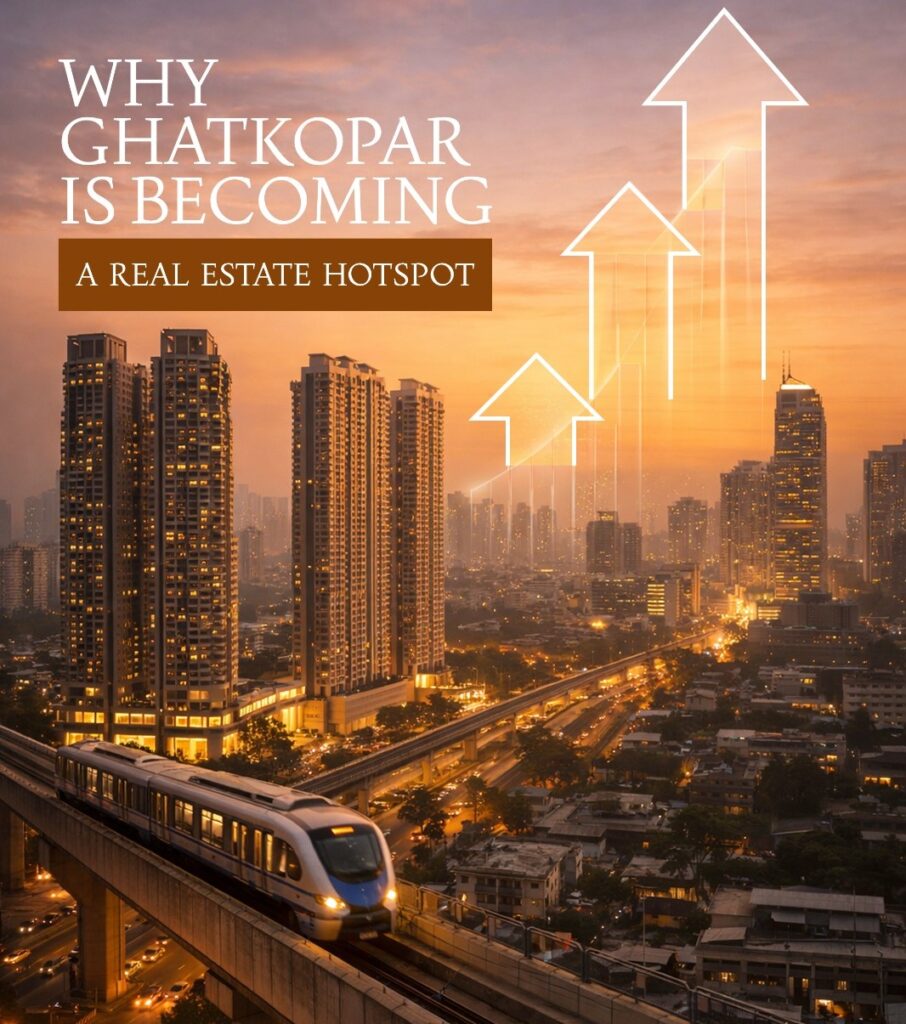
Ghatkopar, one of Mumbai’s most well-connected suburbs, has witnessed a remarkable transformation over the past decade. Once known for its traditional charm and middle-class neighbourhoods, it has evolved into a thriving residential and commercial hub. The driving forces behind this growth are its robust infrastructure and exceptional connectivity, which have significantly influenced property prices in the area.
The Role of Infrastructure Development
Infrastructure plays a pivotal role in shaping real estate values. In Ghatkopar, several key infrastructure projects have redefined the suburb’s landscape and appeal.
1. Metro Connectivity
The introduction of the Mumbai Metro Line 1, connecting Versova–Andheri–Ghatkopar, revolutionized commuting patterns. The Ghatkopar Metro Station serves as a crucial interchange point, linking the eastern and western suburbs seamlessly. This connectivity has drastically reduced travel time to major business districts like Andheri, Bandra-Kurla Complex (BKC), and Powai, making Ghatkopar a preferred residential choice for professionals.
2. Road Network and Eastern Freeway
The Eastern Express Highway and the Eastern Freeway have enhanced road connectivity, providing quick access to South Mumbai and Thane. The improved road infrastructure has not only eased traffic congestion but also increased the attractiveness of Ghatkopar for homebuyers seeking convenience and accessibility.
3. Social Infrastructure
Ghatkopar boasts a well-developed social infrastructure with reputed schools, hospitals, shopping centres, and entertainment zones. The presence of R City Mall, top educational institutions, and healthcare facilities like Hiranandani Hospital in nearby Powai adds to the suburb’s liveability quotient. Such amenities contribute to higher demand and, consequently, rising property values.
Connectivity as a Value Multiplier
Connectivity is one of the most influential factors in determining property prices. In Mumbai, where commuting time is a major concern, areas with superior connectivity command premium rates. Ghatkopar’s strategic location offers easy access to key employment hubs, the airport, and major highways, making it a central point for residents and investors alike.
The upcoming Metro Line 2 and Line 4 extensions are expected to further enhance connectivity, linking Ghatkopar to Wadala, Thane, and other parts of the city. These developments are likely to push property prices upward as accessibility improves.
Impact on Property Prices
Over the years, Ghatkopar has seen steady appreciation in property values. The combination of infrastructure upgrades, metro connectivity, and proximity to commercial zones has led to a surge in demand for both residential and commercial spaces. Redevelopment projects and modern housing complexes have replaced older structures, offering contemporary amenities that attract urban buyers.
According to real estate trends, property prices in Ghatkopar have appreciated by over 20–30% in the past few years, with further growth anticipated as new infrastructure projects near completion.
Future Outlook
With continuous infrastructure expansion and improved connectivity, Ghatkopar is poised for sustained real estate growth. The suburb’s transformation into a well-connected, modern neighbourhood ensures long-term value appreciation for investors and homeowners. As Mumbai’s development continues to move eastward, Ghatkopar stands out as a prime example of how infrastructure and connectivity can redefine urban living and property dynamics.
Conclusion
Infrastructure and connectivity are the cornerstones of real estate growth, and Ghatkopar exemplifies this relationship perfectly. From metro lines to expressways and social amenities, every development has contributed to making Ghatkopar one of Mumbai’s most desirable and valuable real estate destinations. For investors and homebuyers seeking a blend of convenience, connectivity, and capital appreciation, Ghatkopar remains a top choice in the city’s ever-evolving property landscape.